
Fighting Misinformation on South Sudan’s Airwaves
- DRF Comms
- Feb 10
- 2 min read
In South Sudan, radio remains the most trusted and accessible source of information. While internet penetration and use of social media are growing for peacebuilding and civic participation, both broadcast and online media remain a breeding ground for hate speech, misinformation, and incitement to violence. Specifically on community radio stations, funding cuts combined with limited professional training and editorial independence have increased the risk of misinformation, rumour amplification, and unverified reporting.
Strengthening in-house editorial fact-checking systems within radio stations is therefore both a professional and a public-interest imperative, a move that Digital Rights Frontlines took up with support from the Africa Digital Rights Fund (ADRF). Targeting six radio stations - Good News Radio, Access Radio, Radio Emmanuel, Saut Al Mahabba, Anisa FM and Unity FM, the project set out to equip media actors with essential fact-checking skills and tools to enable verification of news content, with an emphasis on accuracy, accountability and transparency before publication or broadcast.
“The radio stations were supported in establishing dedicated fact-checking desks within their newsroom structures and radio programming as well as developing editorial policies that institutionalise fact-checking practices,” said Charles Lotara of DRF (formerly known as DefyHateNow). He added that embedding fact-checking into daily editorial workflows through clear verification protocols and editorial checklists, ensured accuracy and role clarity between reporters and editors, without slowing down news production.
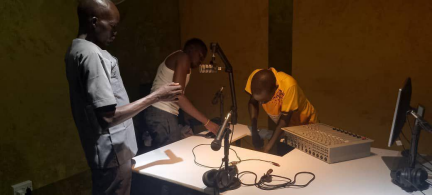
For Unity FM, a volunteer-led station, the engagement included technical and operational support. Previously, the station had relied on external expertise for equipment installation and maintenance. In the face of funding cuts, the station’s broadcast was often off air. To ensure uninterrupted broadcasting, DRF trained Unity FM staff in console configuration, trouble shooting and repairs; and upgraded its phone-in system.
"These trainings really taught us very important basic technical skills that the entire radio was lacking. We learned how to troubleshoot and repair the studio-to-transmitter audio cable, which was once damaged by rats. This showed us the importance of keeping the studio clean to prevent damage from pests, dust, or leaking water”, said Bida Lokoyome, the Unity FM Program Manager.
Station Manager Emmanuel Khamis spoke with pride about mastering the mixer and software — and being able to train others in turn.
"I now know how to connect all the studio microphones and headphones. In addition, I can install and configure the studio mixer and the software. I can also train other staff on how to use the mixer and software. This is a great improvement for me and the entire station," Khamis stated.
As noted by Lorata, for the over 34 journalists reached across six radio stations, the fact-checking, information verification and technical training were not just skills upgrades: “They are confidence upgrades”.
Amidst continued political uncertainty in South Sudan, community radio stations will now be able to starve off hate speech and incitement to violence, as the country heads to the polls later this year.


Comments